When you hire a chef for a gathering, you are usually choosing between two services: a private chef dinner, cooked and served in your space for a small group, or event catering, prepared for a larger crowd at a venue. They share a kitchen's worth of skills but differ in format, staffing, and cost structure. This guide walks through how to choose.
Culinary Revolutionary provides both private chef dinners and event catering on South Florida's Gulf Coast. Share your event details through the inquiry form and include your city or ZIP code to confirm availability.
1. Start with guest count
The number of guests is the single biggest factor. Up to about twelve, a private chef dinner usually works best: the chef cooks on-site, plates each course, and adjusts to the table. Past twenty or so, full catering takes over — food is prepared in volume, held and finished for service, and served by staff rather than the chef alone. Between twelve and twenty, either can work, and the venue and format below decide.
Be honest about the final count when you inquire, including vendors, plus-ones, and kids who need meals. A plan built for fifteen that becomes twenty-five is a different service.
2. Consider the venue and its kitchen
A private dinner needs a working home kitchen: a stove, an oven, counter space, and refrigeration. Most houses qualify. Catering, by contrast, is built for venues — event spaces, clubs, outdoor setups — where food arrives prepared and is finished on-site with rented or portable equipment.
If your venue has no kitchen at all, say so early. It does not rule out good food, but it changes what is possible: menus that travel and hold well, chafing and finishing equipment, and Staffing to match. The earlier the constraints are known, the better the menu fits them.
3. Pick the format: plated, stations, or buffet
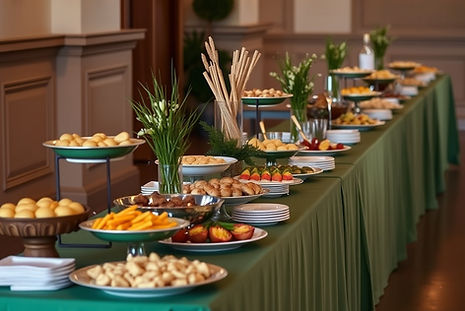
Private dinners are usually plated and coursed — everyone eats the same thing at the same time, which is why they suit smaller groups and occasions. Catering offers more formats: plated for formal programs, stations for variety and movement, buffet for value and speed. Each format needs different staffing and space.
Match the format to the event's energy. A seated anniversary dinner wants courses and pacing. A fundraiser where people mingle wants stations they can visit between conversations. When in doubt, describe the evening you picture and let the format follow.
4. Use the menu to compare fairly
When comparing options, compare equivalent menus. A three-course plated dinner and a heavy-hors-d'oeuvres reception are different amounts of food at different price points — neither is "cheaper" without the menu attached. Ask what each option includes: courses, rentals, staffing, setup and cleanup, cake cutting, coffee service. The line items matter more than the headline number.
Dietary needs cut across both services. A vegetarian guest at a private dinner gets a composed plate; at a catered event, they need a labeled option that is actually satisfying. Flag restrictions early either way — a vegetarian direction and coastal menus like the Key West inspired selection can anchor either format.
5. Book on the right timeline
Private dinners can often be arranged with a few weeks of lead time, though holidays book out. Catered events need more runway: tastings, rentals, staffing, and venue coordination typically want six to eight weeks at minimum. If your date is close, lead with it — availability decides faster than any other detail.
Still unsure which service fits? Tell Culinary Revolutionary about your event — guest count, venue, and date — and include your city or ZIP code to confirm availability.